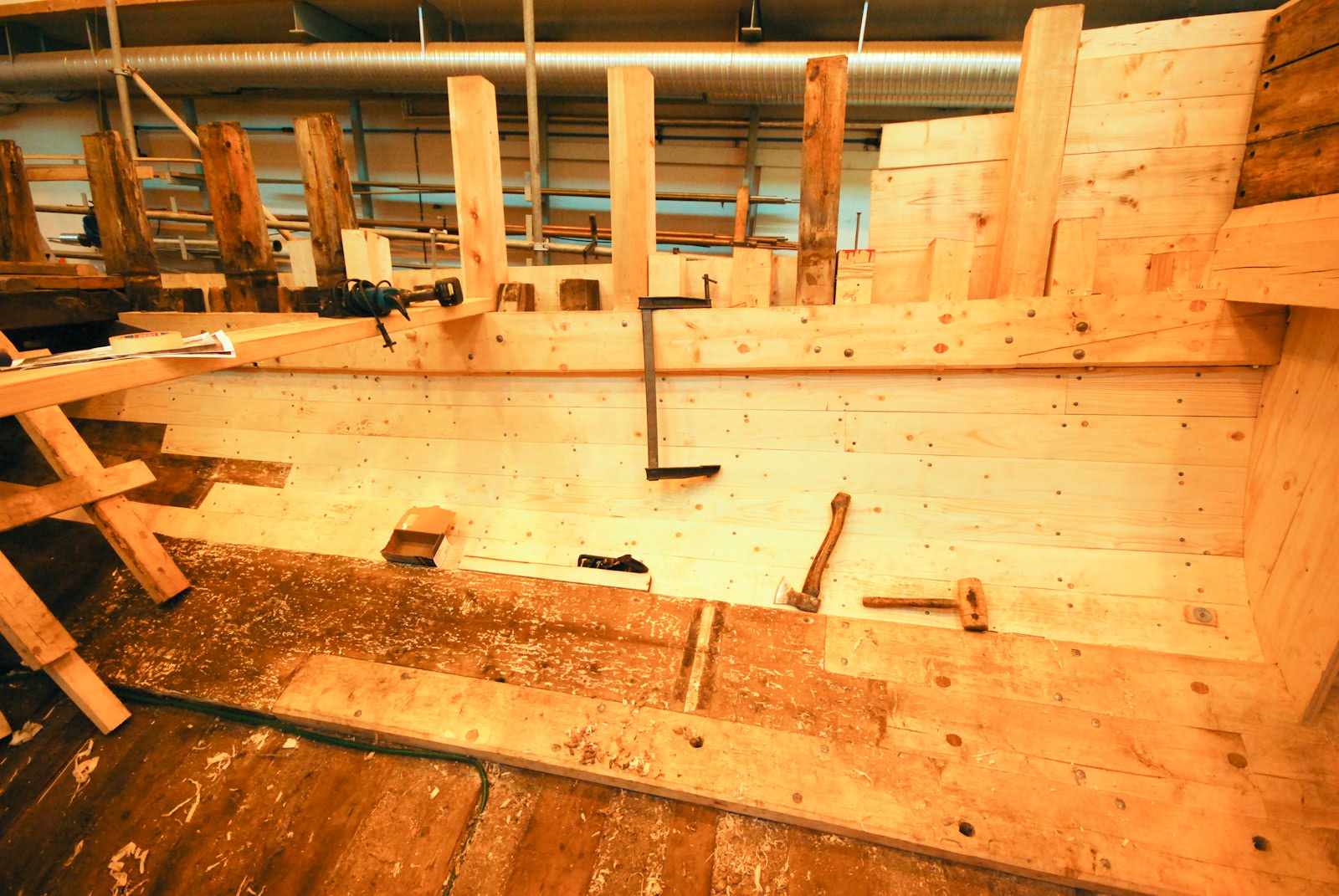
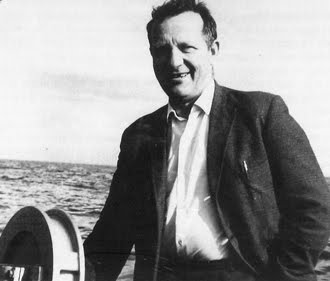
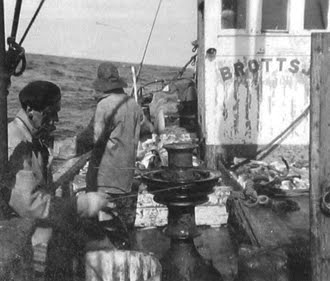
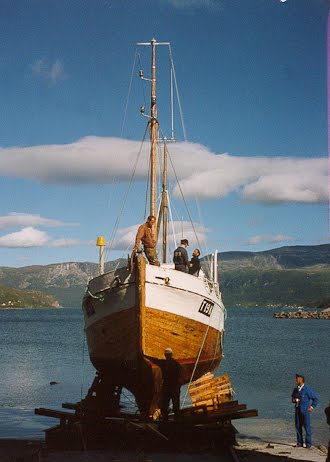
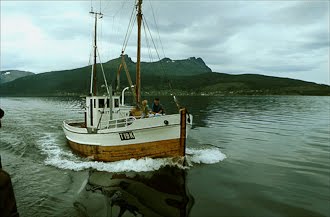
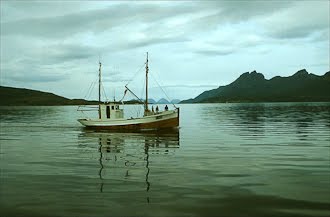
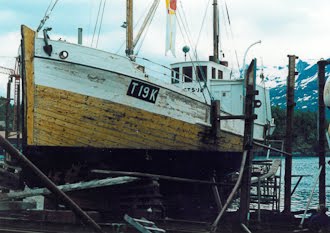
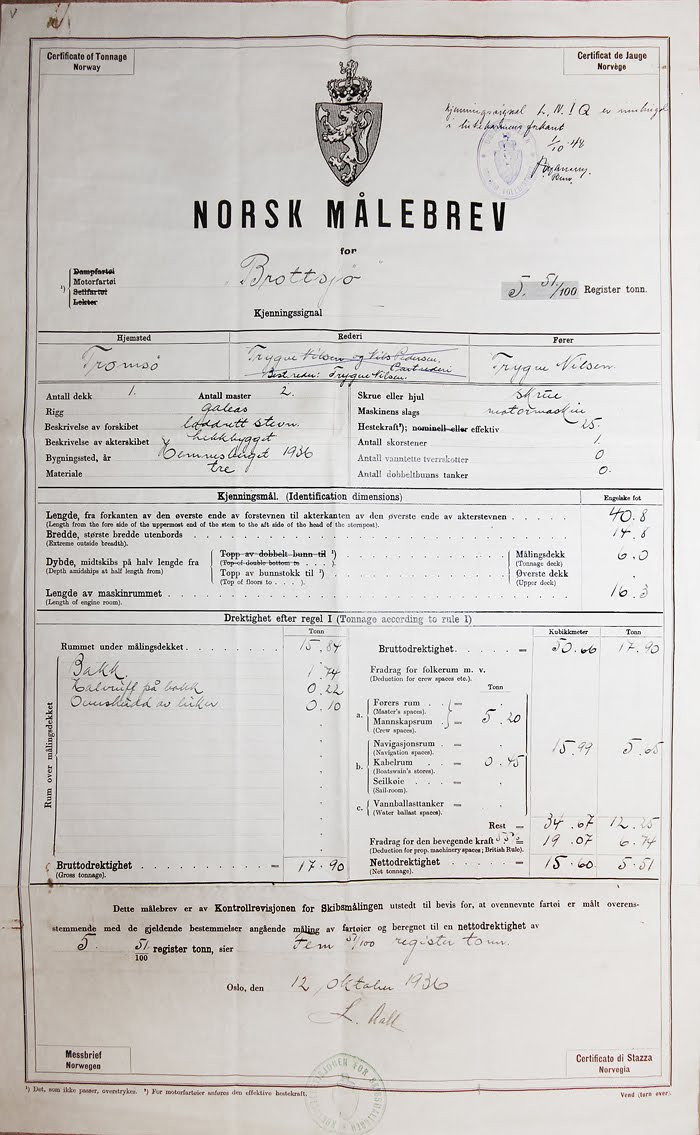
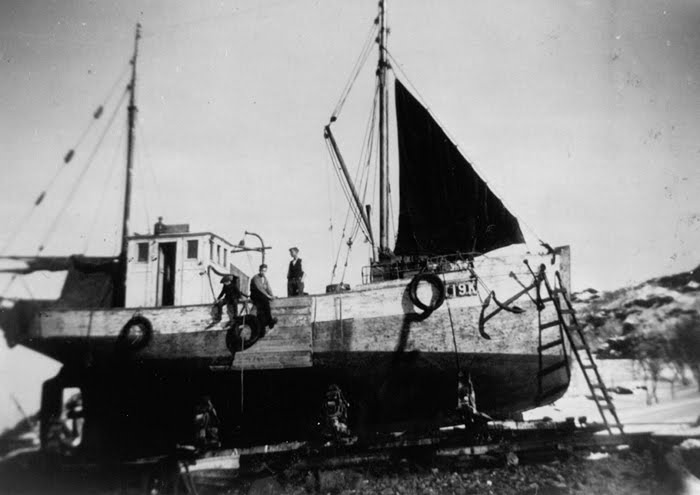
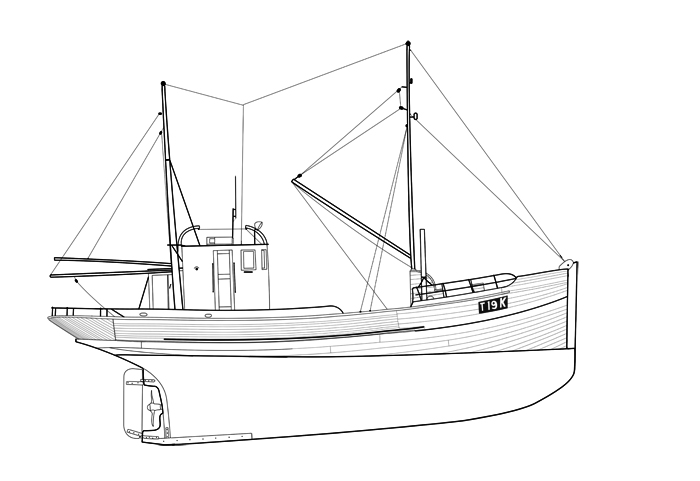
Torsdag den 29. oktober 2009 slippsatte Nordnorsk Fartøyvernsenter M/K Brottsjø. Brottsjø var tidligere fiskebåt, og ble bygget for Trygve Nilsen i 1936. Båten eies nå av Nordnorsk Fartøyvernsenter og Båtmuseum. I de kommende år vil Brottsjø gjennomgå total restaurering, og denne vil du kunne følge på her i bloggen. Vi vil prøve å oppdatere bloggen ukentlig med tekst og bilder fra restaureringa. Du vil også kunne lese om teknikker vi bruker, og konstruksjonsløsninger.

Thursday the 29th of October the former fishing boat Brottsjø was put on the slipway at Fartøyvernsenter in Gratangen, Norway. The coming few years she will be totally restored. On this blog I will show on a weekly basis the progress we are making trough text and photographic documentation. Every now and then I delve deeper in to the techniques we use and of the construction methods.

Christiaan van Gaal (Prosjektleder/Project manager)


Uke 33/34/35


Bjørn har jobbet i lugaren de siste ukene.
The last few weeks Bjørn worked with the "lugar".

Her er Bjørn ferdig å legge panel.
Here you see the finished panelling

Panelet ble spesialbestillt til Brottsjø.
The panels are specially made for this job.

Etter at Bjørn var ferdig startet han med resten av interiøret. Vi prøver å bruke så mye som mulig av det gamle interiøret. Overflatebehandlinga tar vi senere.
After the panels Bjørn started with the rest of the interior. We try to use as mush as possible from the old interior, later we will work with the old paint.

Her er et bilde av innredninga før den ble demontert.
Here you can see the old interior.

Deler av den gamle innredninga var råtten, så Bjørn skifter disse ut med kopier.
Some of the old parts were rotten so Bjørn replaces them with new parts.

Ovenfra.
From above.

Å tilpasse de større interiørdelene til det "nye rommet" er ingen enkel sak.
Fitting the bigger parts of the interior into the new situation is a challenge.

Uke 31/32


Forrige uke begynte Joost med reimene.
Joost started last week with the sides of the deck and here you see him fitting the "reimer".

Tilpasningene må være tette og fine, og er et nitidig arbeid. De midlertidige skruen er nå erstattet med skipsspiker.
It all has to fit nice and tight. The temporary screws are replaced with the correct nails.

Her aner man litt av rissprofilen i baugen på Brottsjø.
Here you can see the nice lines of Brottsjø's hull.

Utfallende mot toppen av kvitrekka.
Compare it with the old ones

Bjørn har gjort ferdig garneringa denne uka, og har gått tilbake til arbeidet med skottet og dekksbjelkene igjen.
Bjørn finished the planking on the inside this week and started working on the bulkhead and deck beams again.

Gammelt og nytt i skjønn forening.
Old and new together.

Vi venter med å lukke skottet for å ha passasje. Neste uke begynner vi med innredninga.
We leave it open for now for easy entrance. Next week we will start on the interior.

Alle dekksbjelkene er ferdige. De fleste er nye da de gamle var alt for dårlige til å kunne berges. Grana er ømfindtlig i fuktige miljøer med dårlig utluftning, men her har den gjort jobben sin i mer enn 70 år.
All the deck beams are finished. Most of them are new, the old ones were to far gone to be saved, spruce is not that resilient specially not in wet places with bad airflow but after more than 70 years they did there work.

Uke 29/30

Jeg begynte med garneringa. De en tomme og en kvart tykke plankene legges på slik de originale lå.
I started working on the inside, the one and a quarter inch planks or "garnering" are put back in the same places as the original ones
Blandinga av gammelt og nytt begynner å bli synlig.
The mix of the old and new starts to be visible.
Båtbyggeren Bjørn jobber også på Brottsjø fra nå av. Her jobber han med skottet under bakkbjelken. Det gamle var råttent, men fungerer som mal under oppsettinga av nytt.
Boat builder Bjorn is working on Brottsjø also from now on, here he is working wit the new bulkhead. The old one was rotten in the top and bottom so we use the leftovers for reference.
Bakkplankene på styrbordsida er montert. To lange bolter går gjennom bakkplankene og bakkbjelken under. På denne sida var plankene av gran når båten kom til Gratangen sist på åttitallet, mens de samme plankene på babordsida er i furu. Vi er usikre på hvilket materiale som var benyttet originalt siden det trolig er utført en reparasjon, men mest sannsynlig har det nok vært gran som resten av fartøyet.
On starboard side the new "bakkplank" is mounted to. Two long bolt's go throu it and the beam underneath. On this side the plank was made out of spruce when the boat came here in the early nineties but on port side it was made out of pine, it is the original from when it came here but for now it is not clear what they used when they build the boat, most likely spruce because most of the boat is build from that type of wood.
Her vises bakkplankene på begge sidene.
Here you can see the two next to each other.
Kazimierz har begynt å arbeide med motoren. Denne er i god stand, men trenger allikevel litt stell og fjerning av rust. Trygve Nilsen tok godt vare på Brottsjø i de over femti årene han hadde båten, og maskinrommet var plettfritt når Brottsjø kom til Gratangen.
Kazimierz started working on the engine. The engine is in good condition it have to be cleaned good and all the rust has to be removed. Trygve Nilsen took good care of Brottsjø, he had it for more than 50 years and it's save to say that there was no rust on or around the engine or any other part in the engine room.
Joost har tatt opp arbeidet på huden igjen, de siste plankene.
Joost started working on the planks again, the last ones.

Retningslinjer for prosjektet.


Fartøyets drift og vedlikehold skal ha som overordnet mål å sikre det som et varig kulturminne, slik at den kulturhistoriske verdien ikke blir forringet eller går tapt. The vessel usage and maintenance should have the primary objective of ensuring it's Cultural Heritage. So that the cultural-historical value is not degraded and kept preserved .

Restaurering skal skje etter prinsipper som klart ivaretar de opprinnelige kvaliteter ved fartøyet ut fra en nærmere dokumentert epoke i dets historie. Til grunn for alt istandsettingsarbeid på fartøy med vernestatus skal ligge en detaljert restaureringsplan som bygger på en historisk dokumentasjon av fartøyet. -Restoration should take place according to principles that clearly protect the original qualities of the vessel from a thoroughly documented era in its history. The basis for all restoration work on boats with protected status should be a detailed restoration plan for the boat build on historical research that's well documented.

Arbeidet skal være virkelighetstro, Det betyr at fartøyet i det ytre kommer til å fremstå som nettopp dette fartøyet eller denne fartøytypen har sett ut i en nærmere definert periode i dets historie. Motor- og andre tekniske installasjoner skal tilpasses slik at de forstyrrer fartøyets kulturhistoriske fortellerverdi minst mulig. -The work will be true to its origin, This means that the vessel will appear as just that vessel or the vessel type that is defined in a specific period in its history. Motor and other technical installations should only be changed so that they interfere in the least possible way with the vessel's historical origins.

Arbeidet skal være materialetro. Dette betyr at alt istandsettingsarbeid blir utført som kopi av de eksisterende løsninger, og det skal brukes materialer av samme type eller tilsvarende: Eik ikal erstattes av eik, bek og drev med bek og drev, messing skruer med "messing skruer, firkantmutter med firkantmutter osv. -The work will be true to its material. This means that all restoration work is a copy of the existing solutions, and to use materials of the same type or equivalent: Oak is replaced by oak, brass screws with brass screws etc.

Arbeidet skal være håndverkstro. Dette betyr at alle detaljer i skrog, innredning og rigg i størst mulig grad er utført med tidstypisk form, bearbeidelse og sluttbehandling. Utskiftede deler skal være eksakte kopier av de gamle og med de samme dimensjonene. -The work will be true to its craftsmanship. This means that all the details in the hull, interior and rig are made as far as possible to the specifications of the time . Replaced parts shall be exact copies of the old and with the same dimensions.

Restaurerte fartøy skal holdes forsvarlig ved like. Arbeidet skal utføres med tradisjonelle, håndverksmessige metoder og i størst mulig utstrekning med historisk korrekte matetrialer. Arbeidsteknikken skal harmonere med den perioden fartøyet representerer. Dette betyr at en hånd høvlet overflate ikke skal vedlikeholdes med elverktøy. Linoljemaling skal ikke overmales med plastmaling. Naturlige råvarer skall ikke byttes ut med kjemiske osv. -The restored vessel shall be reasonably the same. The work will be done with traditional, woodworking methods and in the greatest possible extent with historically accurate materials. Work technique's should harmonize with the period the vessel represents. This means that an originally hand-planed surface shall not be planed with power tools. Natural oil paint should not be painted over with chemical paint etc.

Det skal utarbeides en verne- og vedlikeholdsplan for fartøyet, der intensjoner og krav i -disse retningslinjer er nedfelt. Innholdet i planen skal godkjennes av Riksantikvaren eller et fartøyvernsenter. -There shall be established a protection and maintenance plan for the vessel, with the intentions and requirements specified in these plans. The contents of the plan shall be approved by the "Riksantikvaren " or a "fartøyvernsenter".

The General Conference of the United Nations Educational, Scientific and Cultural Organization meeting in Paris from 17 October to 21 November 1972, at its seventeenth session, Noting that the cultural heritage and the natural heritage are increasingly threatened with destruction not only by the traditional causes of decay, but also by changing social and economic conditions which aggravate the situation with even more formidable phenomena of damage or destruction, Considering that deterioration or disappearance of any item of the cultural or natural heritage constitutes a harmful impoverishment of the heritage of all the nations of the world, Considering that protection of this heritage at the national level often remains incomplete because of the scale of the resources which it requires and of the insufficient economic, scientific, and technological resources of the country where the property to be protected is situated, Recalling that the Constitution of the Organization provides that it will maintain, increase, and diffuse knowledge by assuring the conservation and protection of the world's heritage, and recommending to the nations concerned the necessary international conventions, Considering that the existing international conventions, recommendations and resolutions concerning cultural and natural property demonstrate the importance, for all the peoples of the world, of safeguarding this unique and irreplaceable property, to whatever people it may belong, Considering that parts of the cultural or natural heritage are of outstanding interest and therefore need to be preserved as part of the world heritage of mankind as a whole, Considering that, in view of the magnitude and gravity of the new dangers threatening them, it is incumbent on the international community as a whole to participate in the protection of the cultural and natural heritage of outstanding universal value, by the granting of collective assistance which, although not taking the place of action by the State concerned, will serve as an efficient complement thereto, Considering that it is essential for this purpose to adopt new provisions in the form of a convention establishing an effective system of collective protection of the cultural and natural heritage of outstanding universal value, organized on a permanent basis and in accordance with modern scientific methods,
Article 5 To ensure that effective and active measures are taken for the protection, conservation and presentation of the cultural and natural heritage situated on its territory, each State Party to this Convention shall endeavor, in so far as possible, and as appropriate for each country: (a) to adopt a general policy which aims to give the cultural and natural heritage a function in the life of the community and to integrate the protection of that heritage into comprehensive planning programmes; (b) to set up within its territories, where such services do not exist, one or more services for the protection, conservation and presentation of the cultural and natural heritage with an appropriate staff and possessing the means to discharge their functions; (c) to develop scientific and technical studies and research and to work out such operating methods as will make the State capable of counteracting the dangers that threaten its cultural or natural heritage; (d) to take the appropriate legal, scientific, technical, administrative and financial measures necessary for the identification, protection, conservation, presentation and rehabilitation of this heritage; and Article 27
1. The States Parties to this Convention shall endeavor by all appropriate means, and in particular by educational and information programmes, to strengthen appreciation and respect by their peoples of the cultural and natural heritage defined in Articles 1 and 2 of the Convention.

Uke 28


Etter 10 uker forlater Peter og Martin oss. De har vært til stor hjelp, selv om de ikke er båtbyggere av profesjon har de gjort meget godt arbeid.

After 10 weeks Peter and Martin are leaving us. They were a great help and though they weren't boat builders they did a great yob.

En av de siste plankene vi vil skifte.

One of the last planks that we will change.

Arbeidet med dekksbjelkene har fortsatt. Her er de montert på plass.

Work on the deck beams went on, here you can see them mounted on there right places.

Peter har forberedt bjelkene for kravellen nedgangskappa står på. Her er alt målt omhyggelig, og svalehaler er laget for fellinga mot kravellen. 

Peter went on preparing the beams for the traverse, measuring everything accurately and making the dovetail connections.

Her er bjelkelaget på plass.
 
Here you see the finished result.

Dette er en gammel måte å kalkulere utforminga av bjelken. Det kan være at andre metoder ble brukt under bygginga av Brottsjø. Båtbyggerier hadde sannsynligvis ulike metoder å gjøre dette på.

Here you see a method of calculating the shape of the beams, these methods are being used for a long time but it can be that in the time and place that Brottsjø was build they used a different method, often these methods went from father till son.

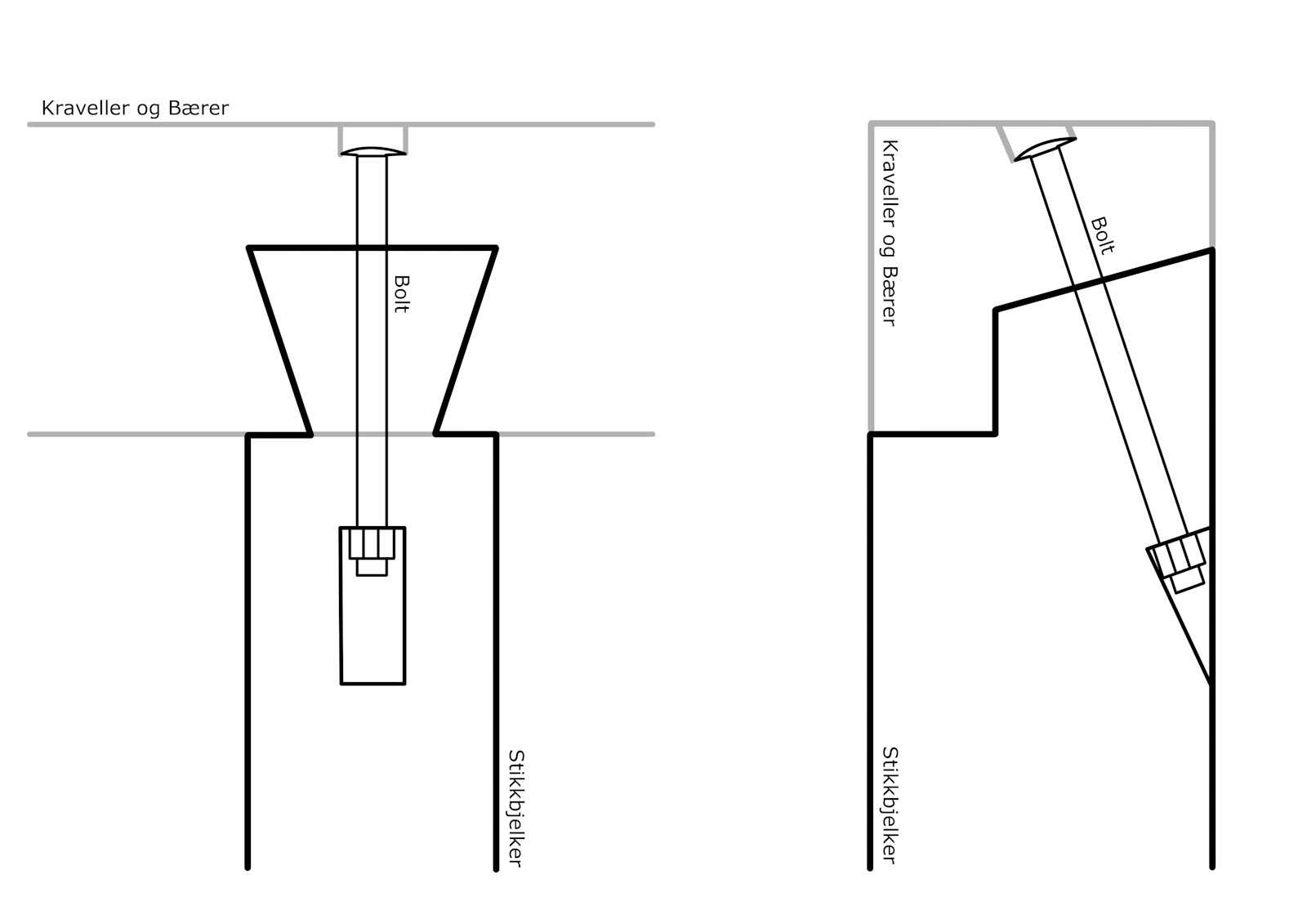
Her vises ei dobbel svalehalefelling, og hvordan boltene var felt ned i disse.

Here's a detail of one of the dovetails and the bolt that goes through it.
Her er en illustrasjon av konstruksjonen.

And here you can see how the construction looks like

På bildet vises de originale bjelkene som vi nå har skiftet. Vi har fortsatt de originale bjelkene på lager, og kan bruke dem som kilder ved eventuelle spørsmål i det videre arbeidet. 

On this picture you can see that we copied all the details, we have these old beams in storage so that we always can go back to them to make sure that the new beams are good copies.

Uke 27


Vi har hatt en produktiv uke.Vi er stort sett ferdige med spantene og har begynt med dekksbjelkene etter at vi ble ferdige med de siste delene til bjelkevegeren.
We had a productive week, the ribs on the inside are for the most part ready and we started with de deck beams after we mounted the last "beam bearers" on the inside of the ribs in the front of the boat.


Martin har fått montert sin første plank, her holder han på med å merke av for spiker og trenagler.
Martin has mounted his first plank and here he is marking the places where there will be nails or wooden pegs.

Han er bare seksten år gammel, men han lager planker som om han aldri har gjort noe annet!
He is only sixteen years old but already he is making planks as if he never did something else

Joost og Peter lager de nye dekksbjelkene. Siden samtlige bjelker blir skiftet bestemte Joost seg for å slå ut buene på nytt i steden for å kopiere de gamle. Det vil lette arbeidet med å slette både under og oversidene betraktlig. Resultatet vil ikke bli nøyaktig lik det gamle dekket men i dette tilfelle er det den beste løsningen.
Joost worked together with Peter to make the new deck beams. Because we have to make all of the beams new for the foredeck Joost decided to use a method normally used when you make a new boat, in this case that's probably the best way to go.

Peter legger de nye dekksbjelkene, det er vanskelig å få visse mål til å stemme med det gamle dekket. Det gamle dekket var i dårlig forfatning da det ble målt opp, allikevel er vi slett ikke langt unna originalen.
Peter is preparing everything for the new beams. Because some of the new measurements are not correct any more compared to the old situation we have to meet somewhere in the middle and make sure that important measurements are ok and that the look and "feeling" is correct.

Her er et bilde fra når vi begynte å rive på Brottsjø - for å friske opp hukommelsen. Det var ikke mye av det gamle dekket som kunne bevares.
Here is an old picture of Brottsjø to refresh your memory. You can see, even from this distance, that there was not much to save from the old deck.

Når dagen nærmer seg slutten er vi bare noen få millimeter unna originalen og bjelkene er klare til å monteres.
At the end of the day we are only a few millimetres from the original sizes and places and are the beams ready to be mounted

Jepp.. dette går veien!
Yes...we are getting somewhere.

Uke 26


Nesten alle plankene er montert. Skipspikerne vi fikk levert for et par uker siden er av for dårlig kvalitet, derfor bruker vi franskskruer i påvente av nye spiker.
Almost all the planks are mounted now. We had a problem with the quality of the nails we got a few weeks ago so till we get new one's we use long screws to mount the planks.


I mellomtida holder Martin på med å slette spantene på innsida av båten. Her skal det senere legges garnering. Det er ikke så lett, man får lite bruk for tomstokken, man må "føle" seg fram og bruke øyemål.
In the meantime Martin is working on the inside of the boat, here he's planing the ribs so the planks on the inside will fit evenly over all the ribs, he's using his eyes to see if the line goes "fluently"


Det er på tide å lage trenagler og få dem på plass.
It's also time to start making the pegs and hammer them in there places.


Joost laget en naggelløe. Her holder han på med å justere den slik at naglene får rett dimensjon.
Joost has made a special tool to make the pegs itself. Her he's adjusting it.

Av og til må en båtbygger lage sitt eget verktøy. Joost forsikret seg om at denne skulle tåle påkjenningene.
Part of being a good boat builder is making your own tools, Joost made sure that this tool will last.


Her er noen ferdige trenagler. Båten er bygget i gran men naglene er i furu. Kilene på innsida er laga av kantved i furu mens døytelene på utsida er i eik.
Here are some of the pegs ready. The pegs are made of pine and not of spruce like most of the boat. The little widget on the outside are from oak and the flat ones on the inside are from pine again.